
The Head Spring: July 2026
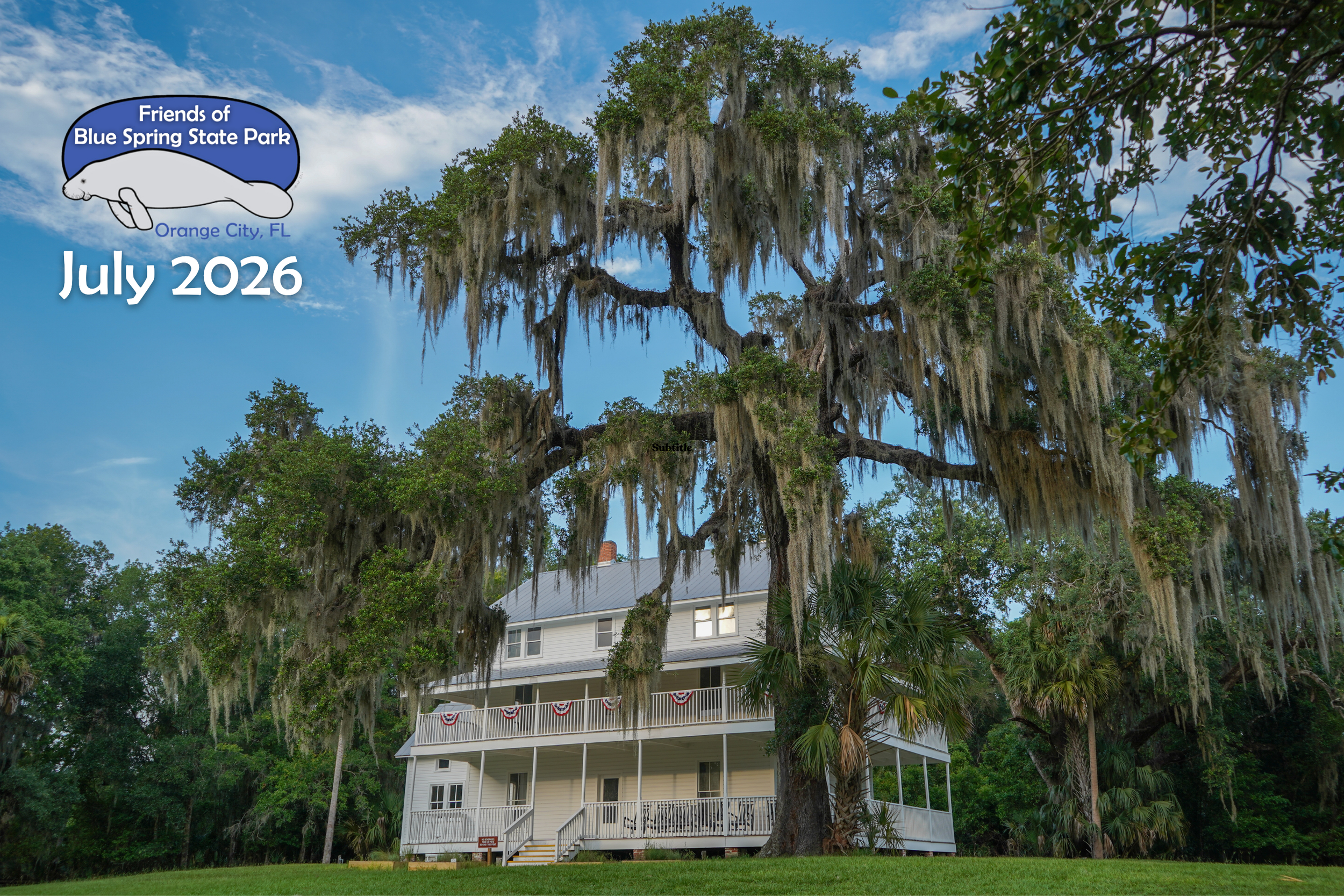
The Thursby House decorated for America’s 250th Birthday. | Photo: Erin Paulakovich
What’s New for The Friends of Blue Spring?!
We’ve added an online Friends of Blue Spring State Park calendar to our website. Anyone can view the calendar to stay up to date on upcoming volunteer opportunities, meetings, events, and other important dates. It's a convenient way to see what's coming up!
Updates from Blue Spring State Park and Hontoon Island State Park
A new day-use reservation program will be implemented at Blue Spring State Park beginning July 15, 2026. All day-use visitors will be required to have a reservation to enter the park.
This does not impact normal volunteer duties. Learn more here.
Florida Dive Company (FDC) is offering guided snorkel and scuba diving tours at Blue Spring State Park. The tours give visitors a unique opportunity to explore the spring and wildlife while supporting the Florida Park Service's mission to provide resource-based recreation while preserving, interpreting, and restoring natural and cultural resources. Learn more here.
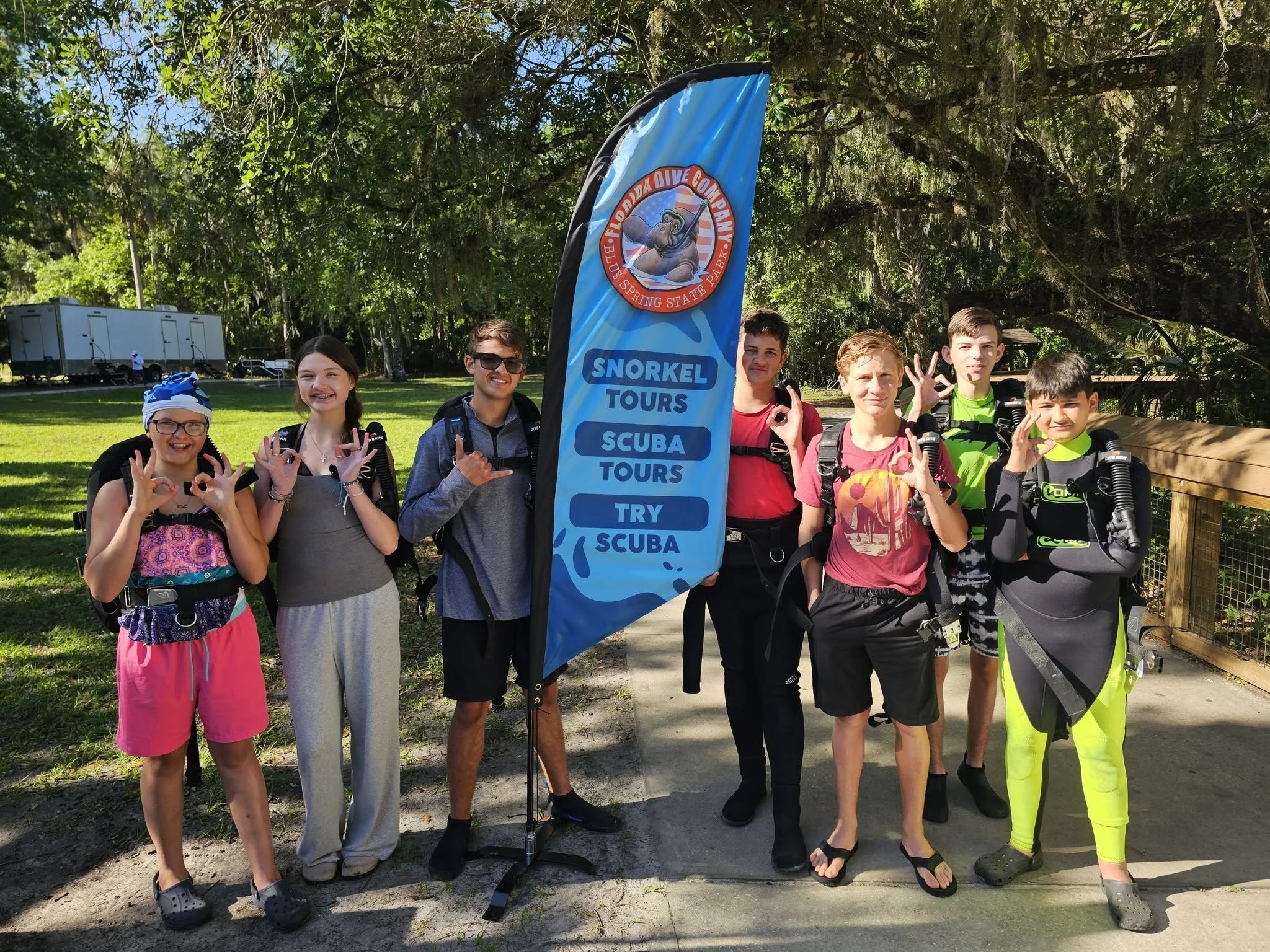
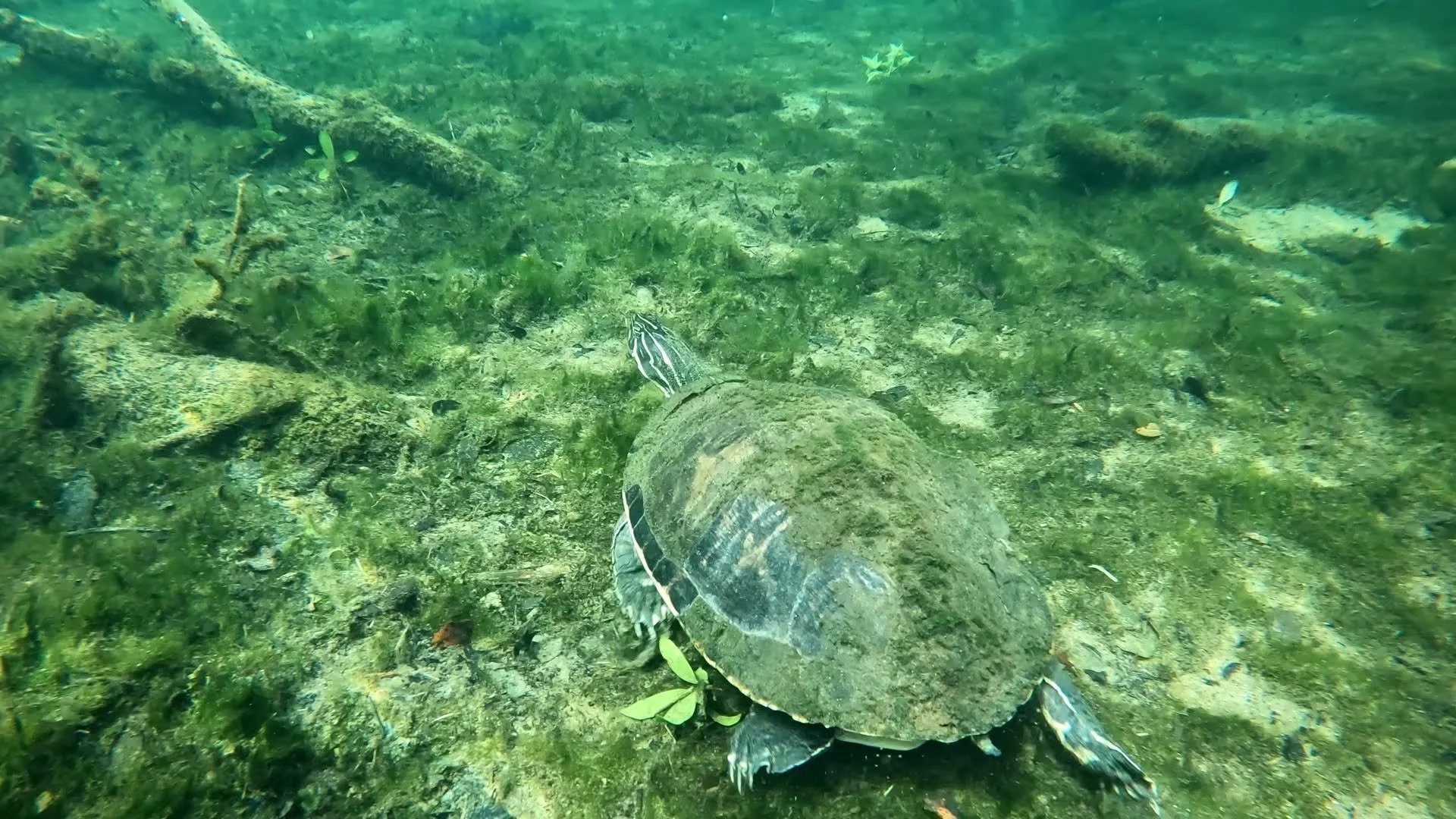
Photos: Florida Dive Company
Primitive camping and cabin rentals are available again at Hontoon Island State Park. Reservations can be made through park concessionaire, Hontoon Island Adventures here.
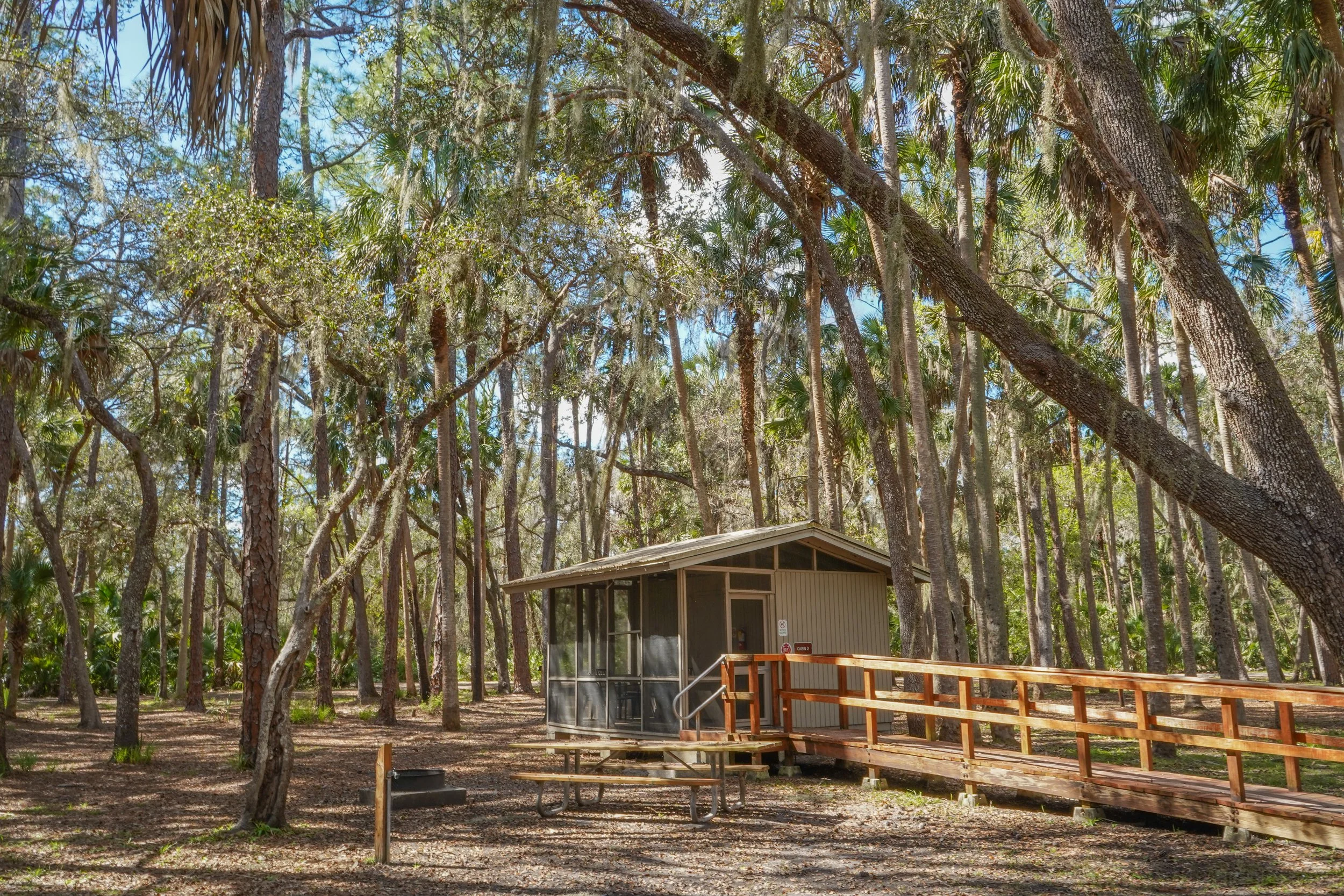
Photo: Erin Paulakovich
Recent Park Projects
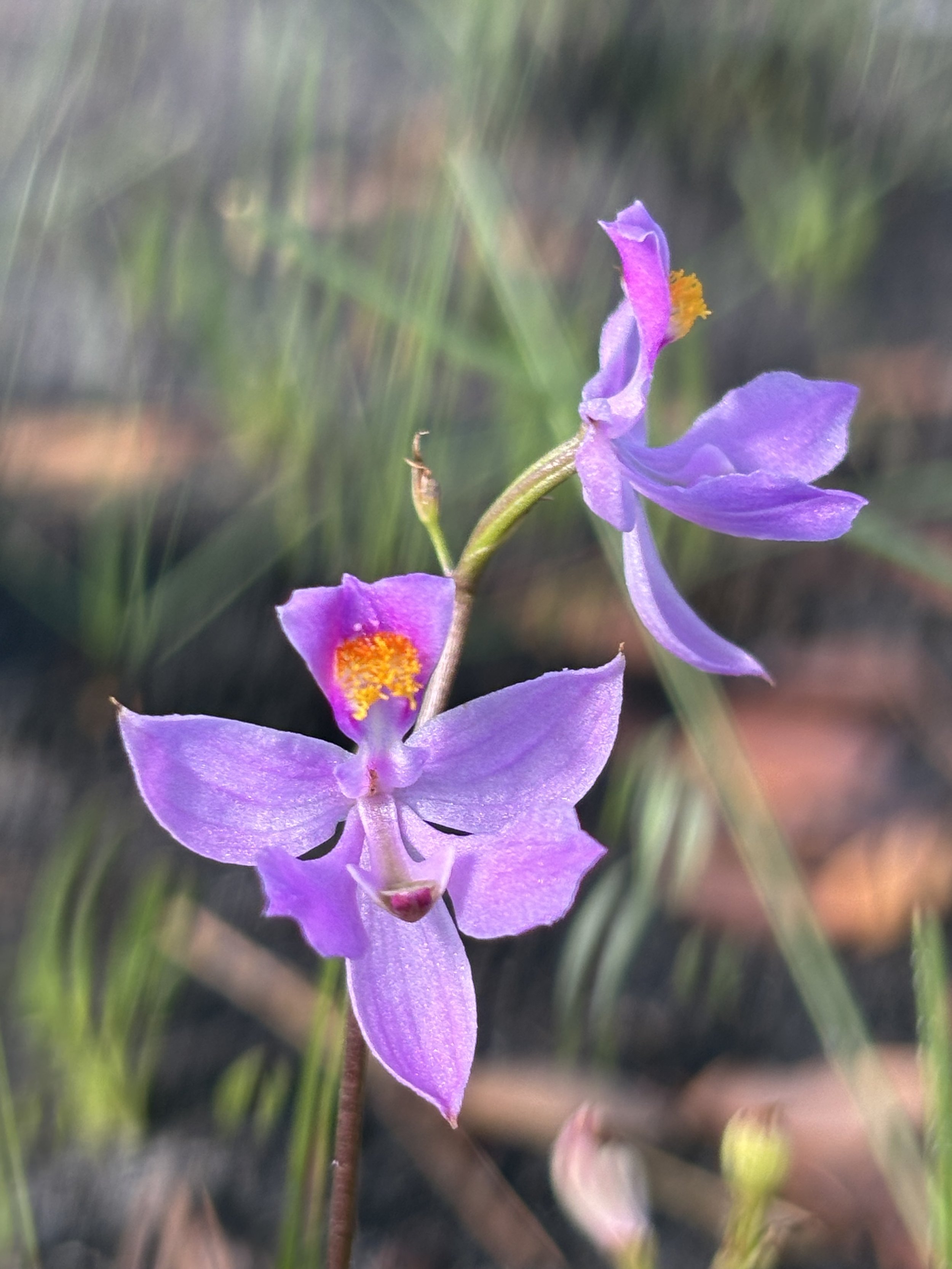
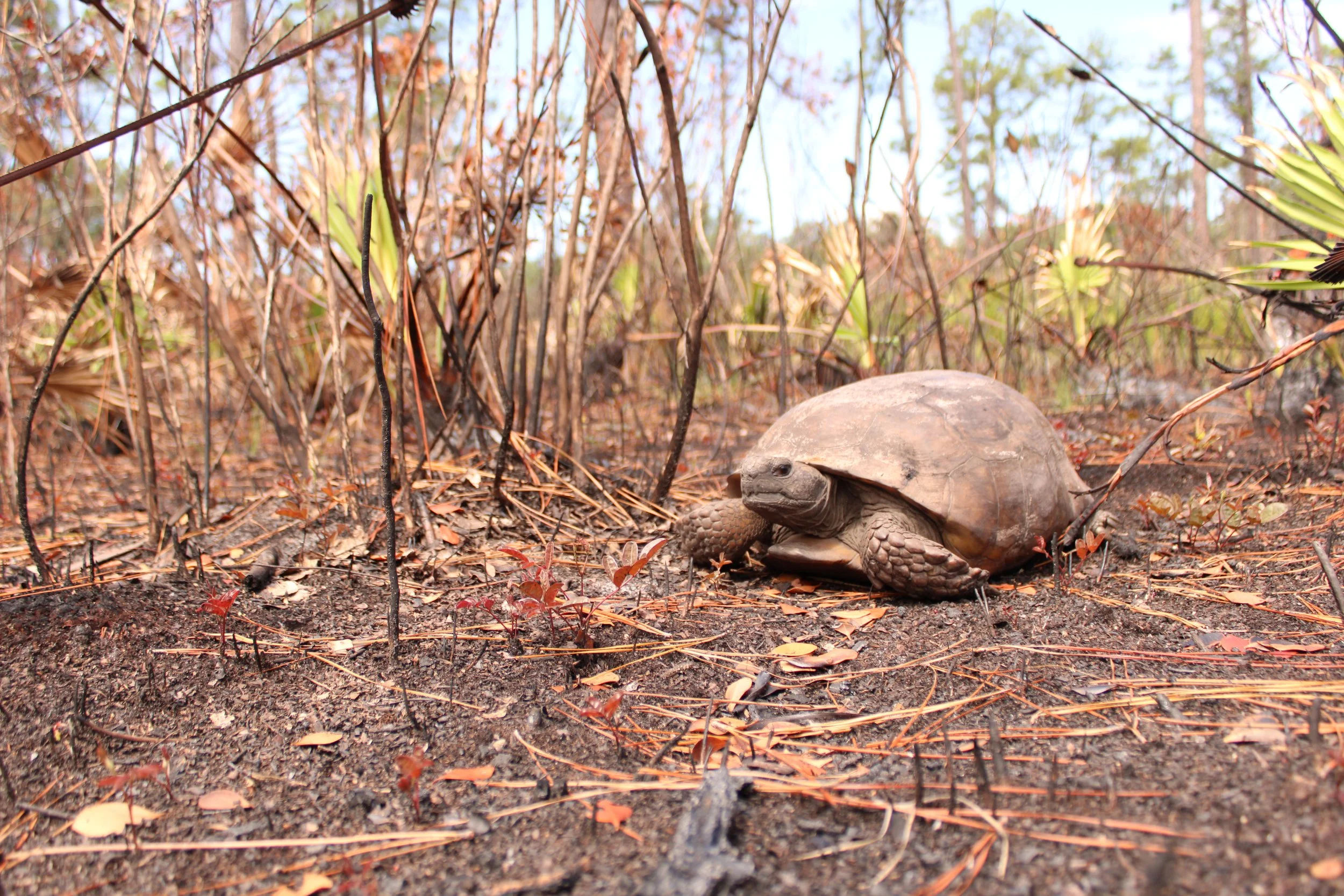
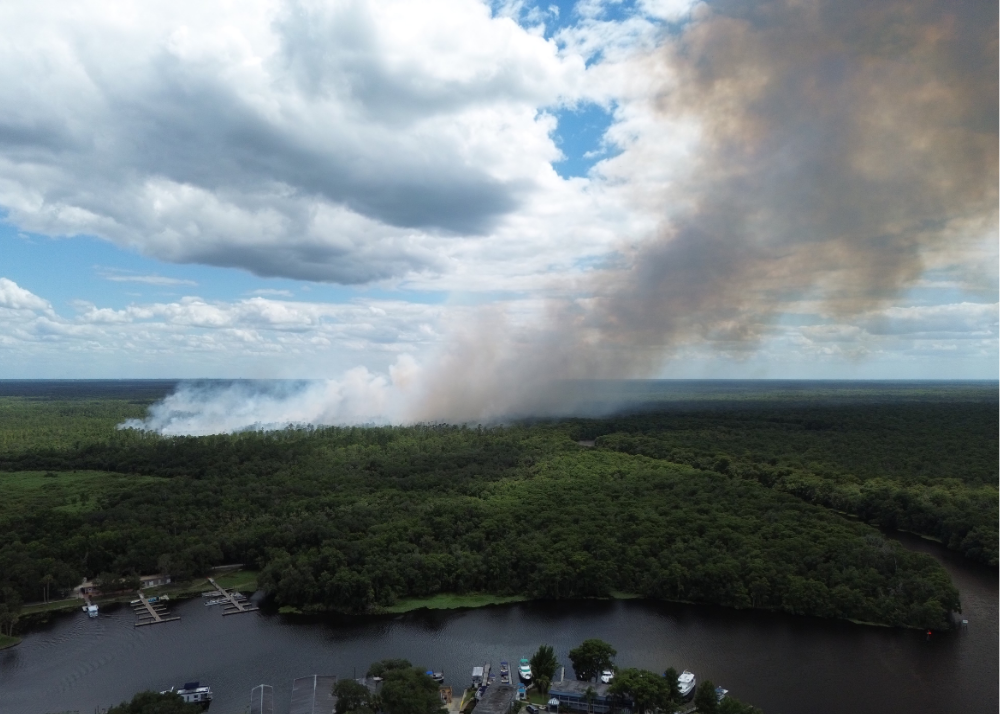
Photo 1: Ranger Adam Hull | Photo 2: Lauren Houghteling | Photo 3: Erin Paulakovich
On June 5th, Hontoon Island State Park performed a 115-acre prescribed burn to help restore and maintain their mesic flatwoods. It aided in the conservation of many endangered plants and animals. This includes Tank, the largest and oldest known gopher tortoise on the island, and the Many-Flowered Grass-Pink (Calopogon multiflorus), an imperiled terrestrial orchid that only blooms after fire. Only about 6,000 are estimated to remain across the entire Southeastern United States. About 15 were seen on the island after the burn. We won’t see these orchids bloom again for another 2-4 years when fire is reintroduced to this zone.
Photos: Leah Brooks
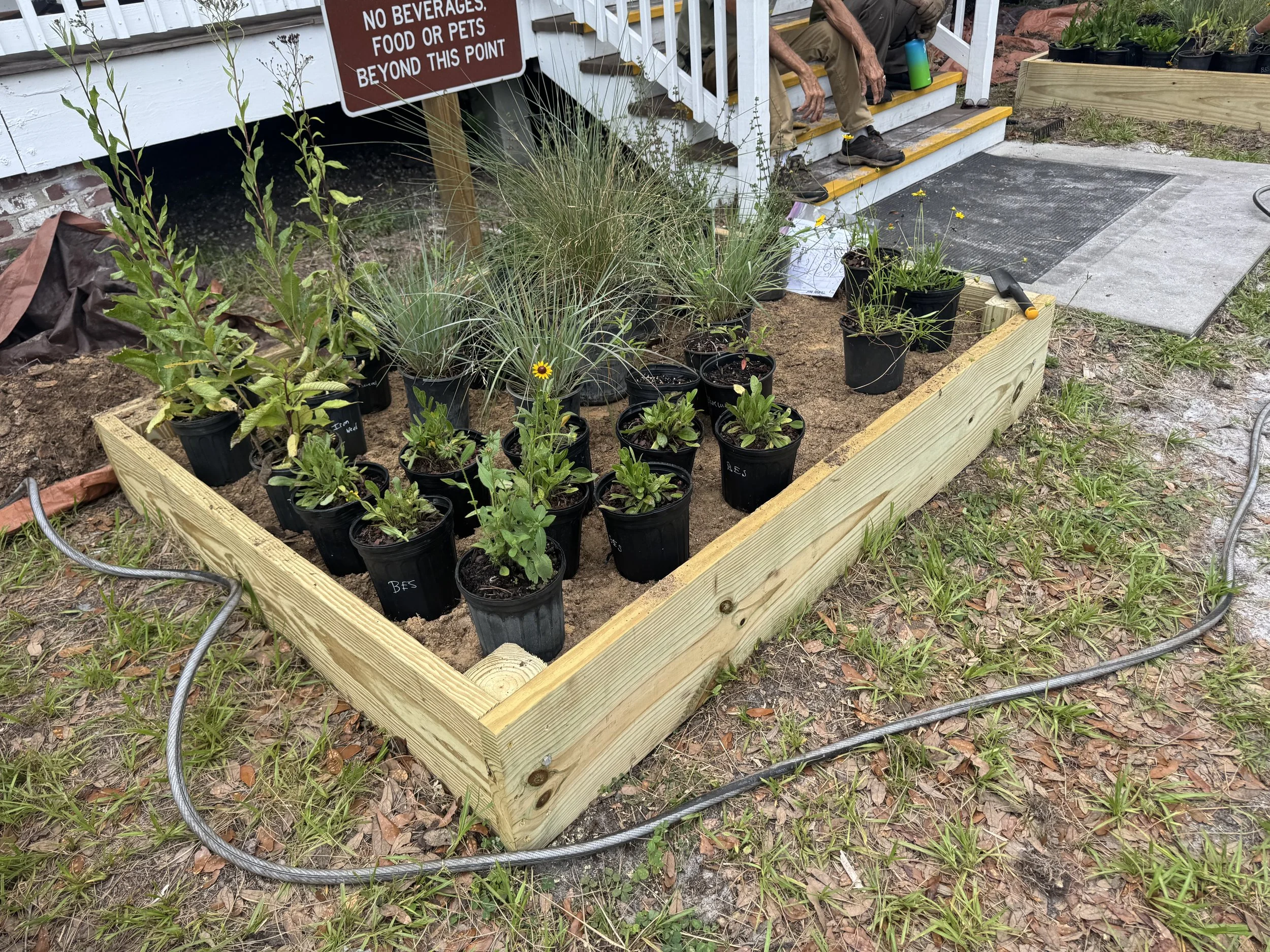
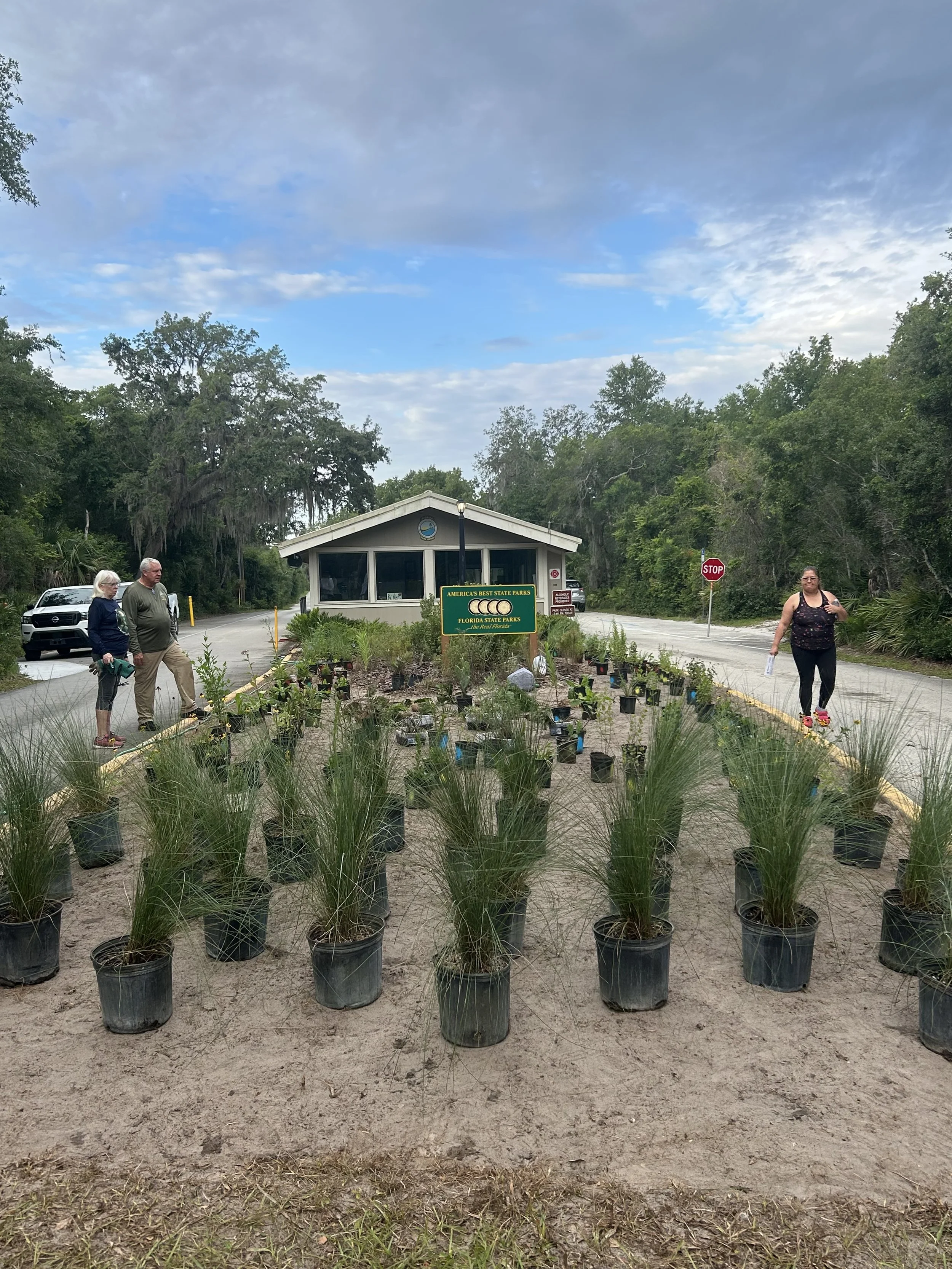
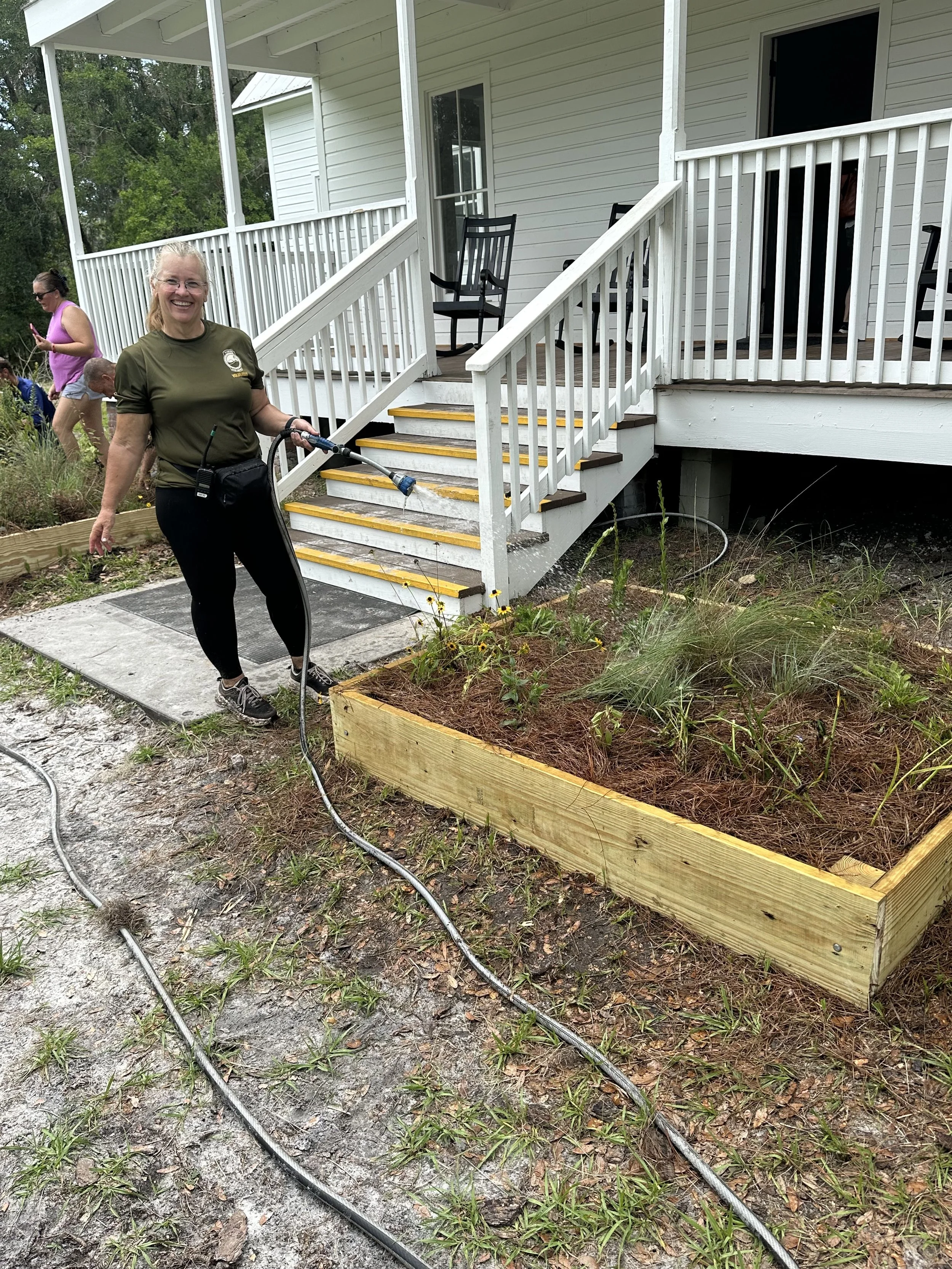
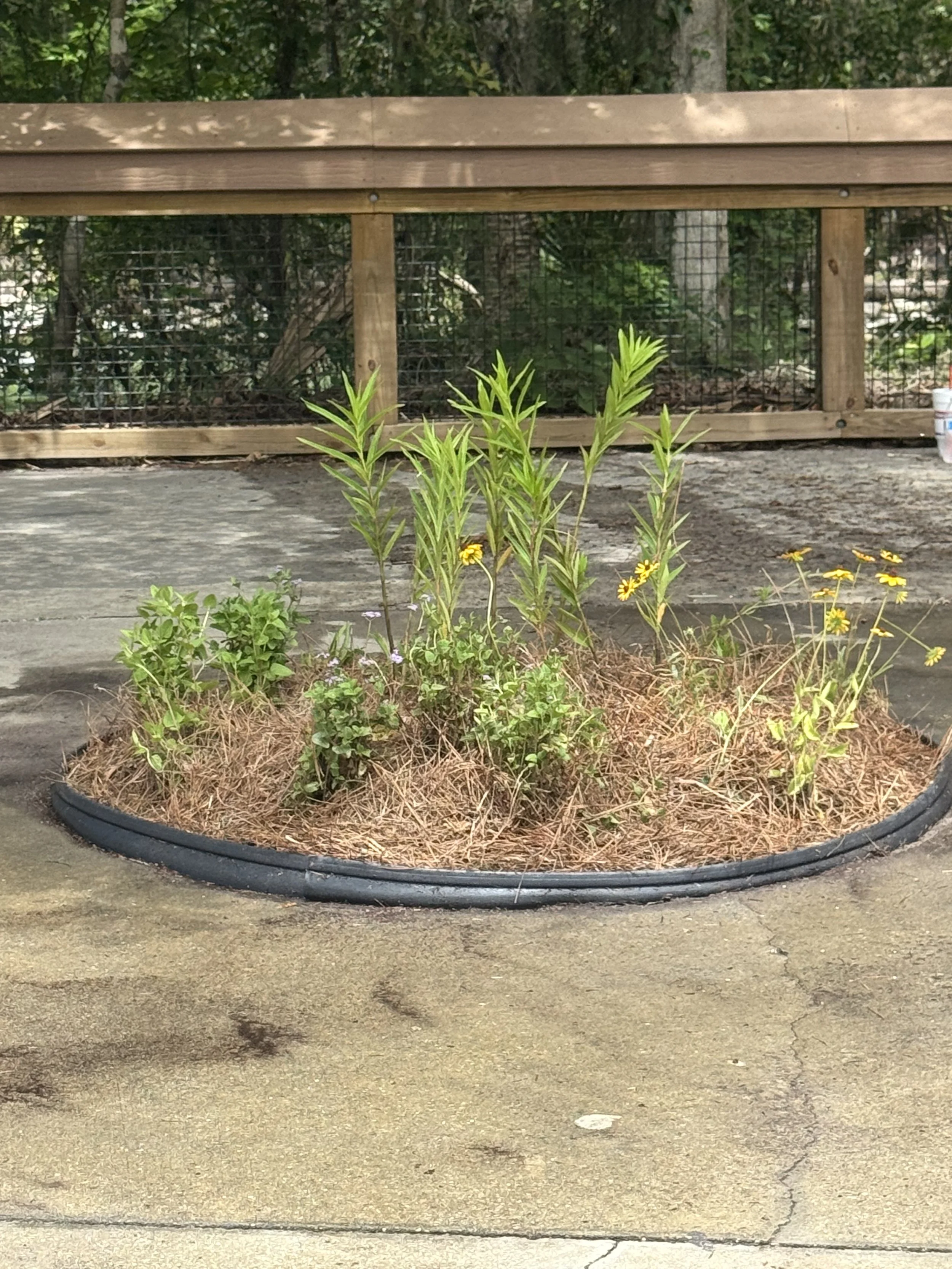
On Friday, June 12, volunteers planted 471 native wildflowers in three locations throughout Blue Spring State Park: the Thursby House demonstration garden, the Visitor Center landscape, and the park entrance. This environmental community service project was spearheaded by the Village Improvement Association (VIA) Orange City Woman’s Club.
Native plant expert Damien Rockwood of Asclepias Acres supplied 30 species of beautiful Florida wildflowers, including Black-eyed Susan (Rudbeckia hirta), Florida paintbrush (Carphephorus corymbosus), and Sandpaper vervain (Verbena scabra). Funding for the Thursby House demonstration garden was generously provided by the Florida Wildflower Foundation through proceeds from sales of the State Wildflower License Plate. Note: small educational plant identification signs will be added within the next few weeks to this location. Funding for the entrance planting was provided by the Friends of Blue Spring State Park, the Blue Spring Manatee Festival, and the Rotary Club of DeBary–Deltona–Orange City. Funding for the Visitor Center planting was provided by the Village Improvement Association Orange City Woman’s Club and Grow Learn Garden by Leah Brooks. Site preparation and professional installation for all three planting areas were provided by Tom’s Touch Landscape Design.
In addition to enhancing the park, the Thursby House demonstration garden will serve as an educational resource, inspiring visitors to incorporate Florida native plants into their own landscapes. Native plants typically require little to no fertilizer, helping homeowners create beautiful, low-maintenance gardens while reducing nutrient runoff into local waterways. Keeping home gardens fertilizer-free helps protect water quality and supports the health of Florida’s beloved manatees, which depend on clean aquatic habitats. This collaborative effort will enhance the beauty of Blue Spring State Park while providing valuable habitat and food sources for Florida’s native pollinators and wildlife for years to come.
Photos: Park Services Specialist Connor Wagner
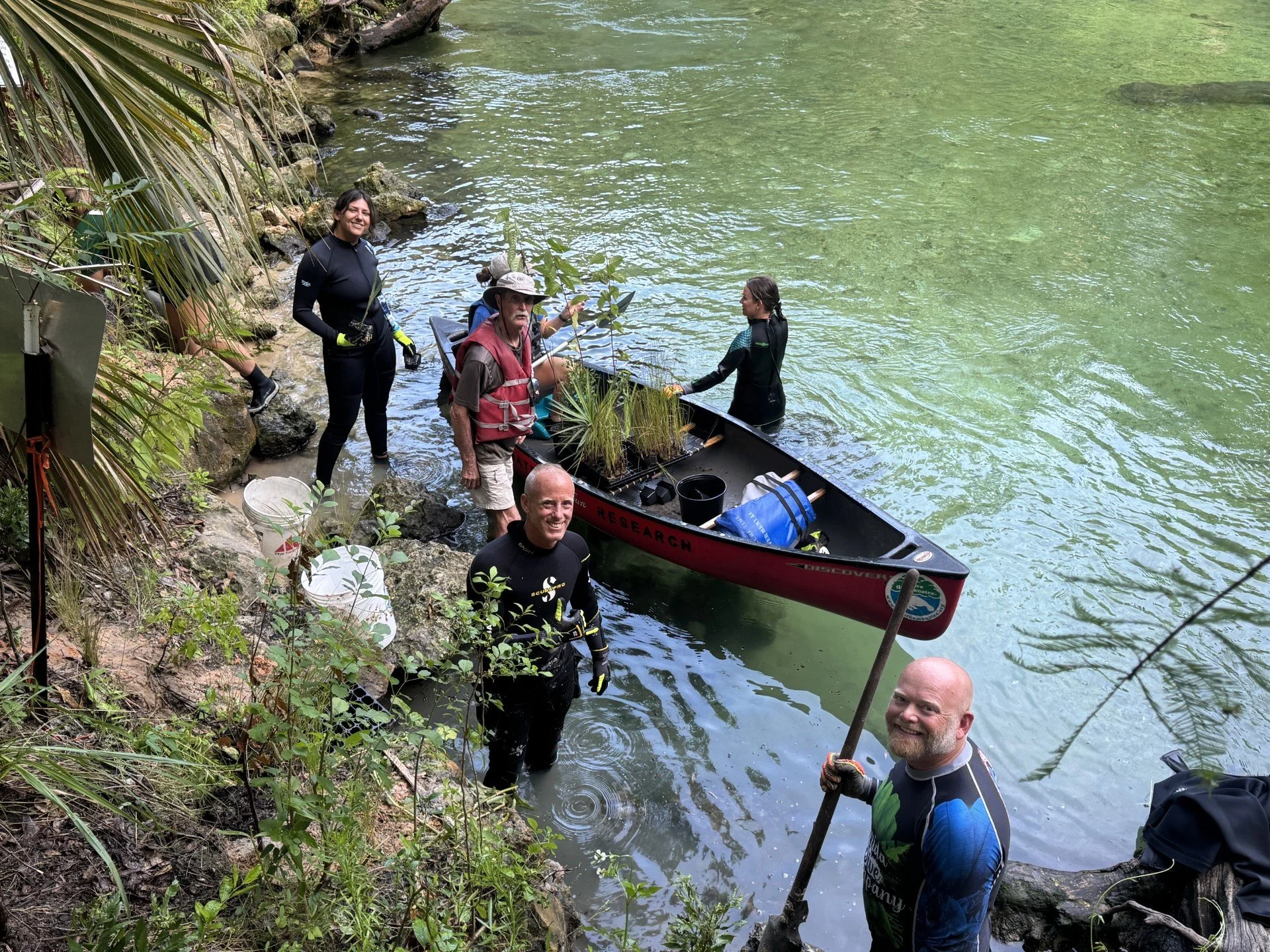
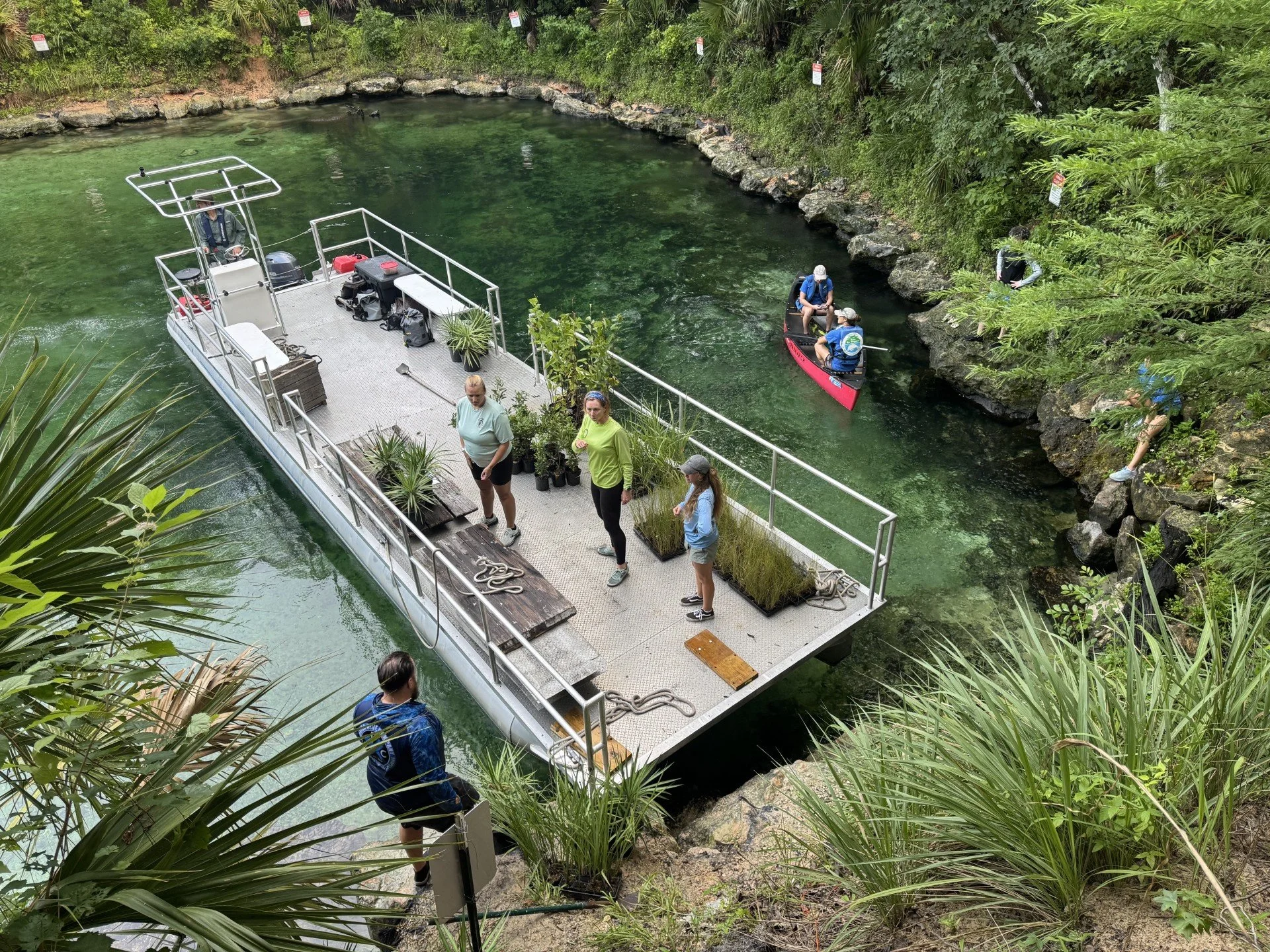
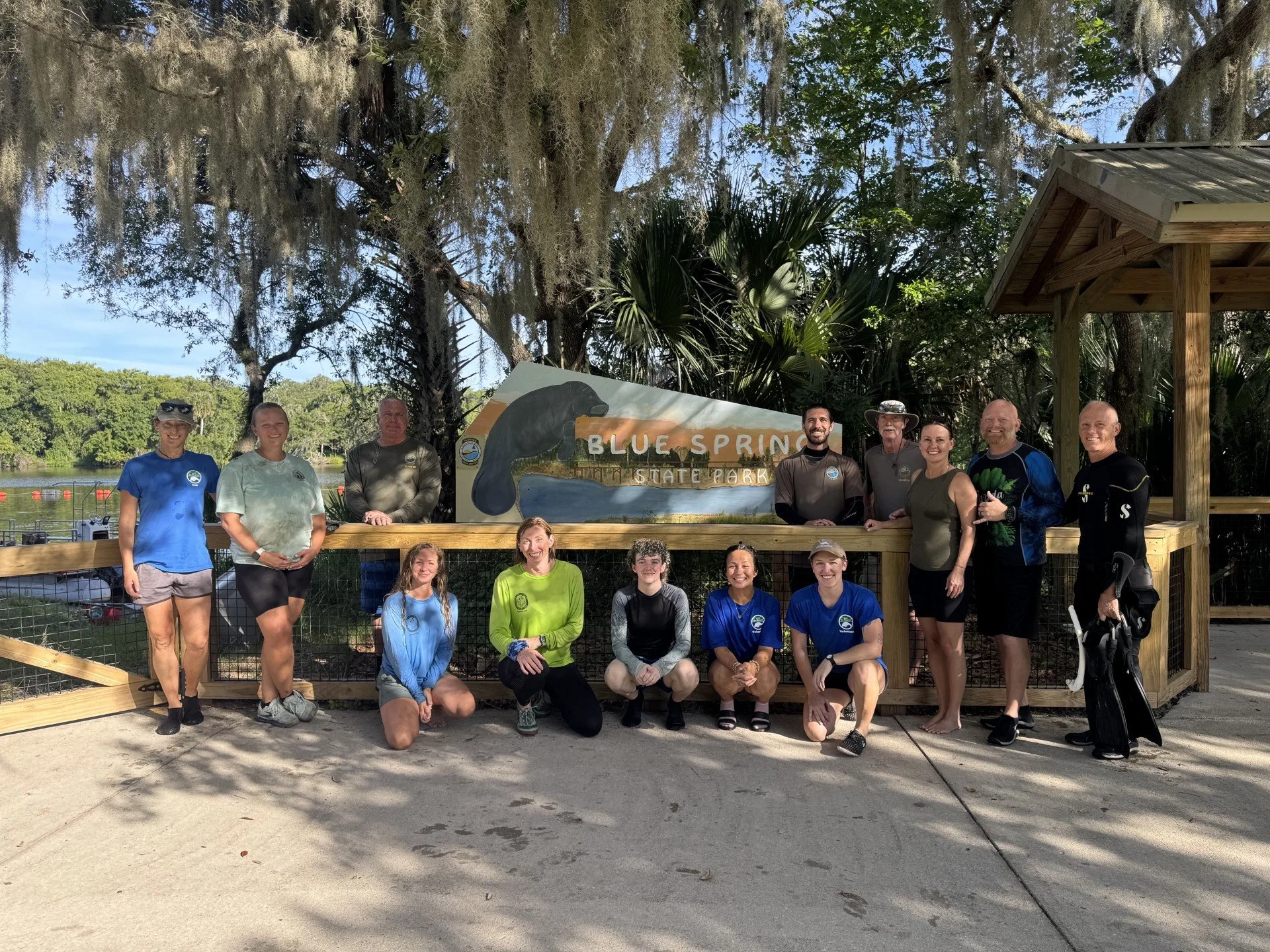
On June 18th, staff and volunteers from Save the Manatee Club, Blue Spring State Park, Friends of Blue Spring State Park, Florida Dive Company and MyFWC Florida Fish and Wildlife planted native vegetation at the headspring and the Manatee Release Ramp at Blue Spring State Park! Funding was provided by Save the Manatee Club and the Friends of Blue Spring State Park. The goal was to reinforce the shoreline and address erosion issues that had arisen since the bank stabilization project and release ramp were finished in 2025. Two manatees (Matthew and Tink Tink) swam up to the head spring to watch us work!
Thanks to everyone who came out to help! We ask visitors to please not climb on the banks, pull out plants or walk on the shoreline so the new plants can settle in.
Photos: Scout Troup 550
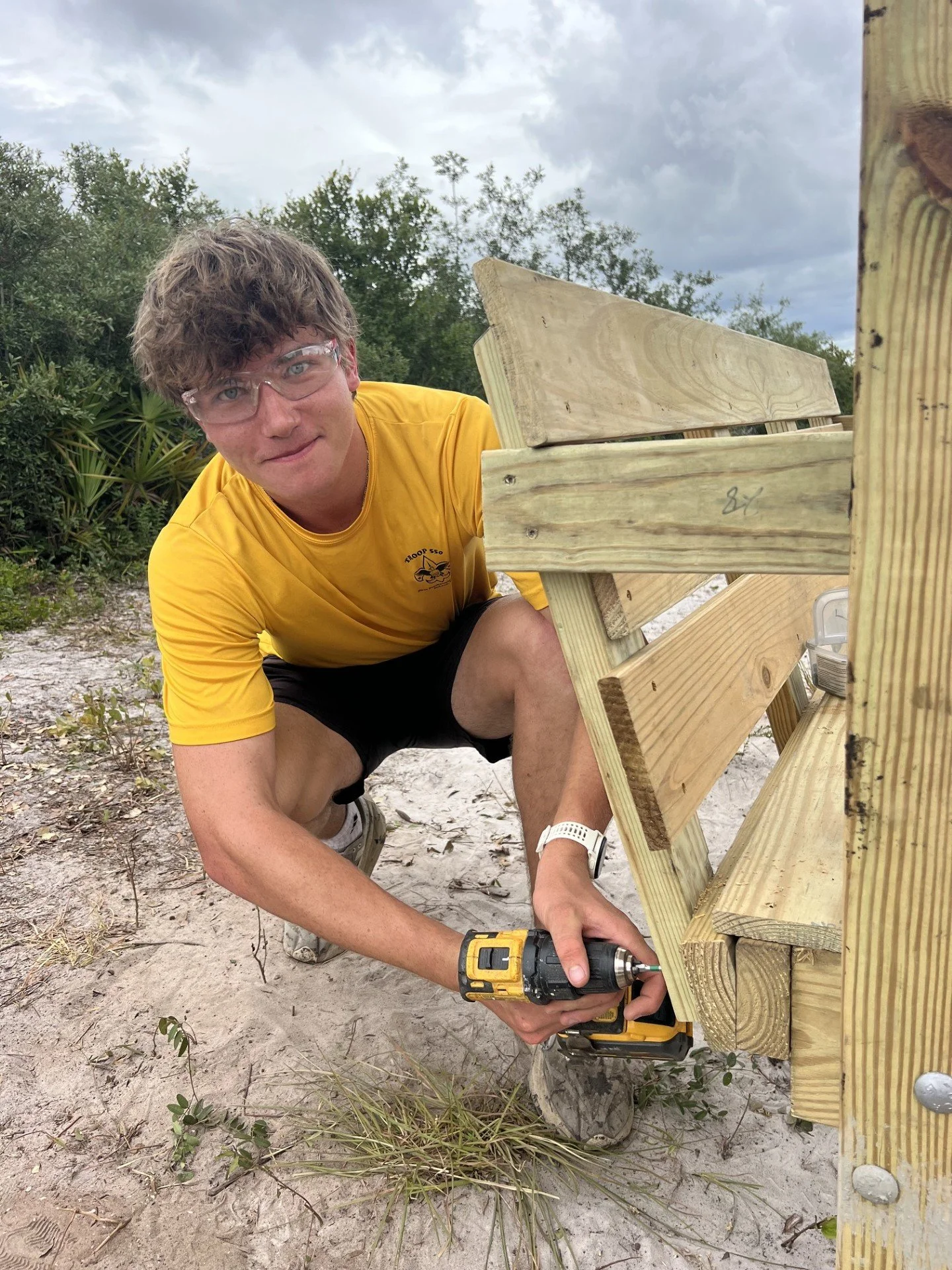
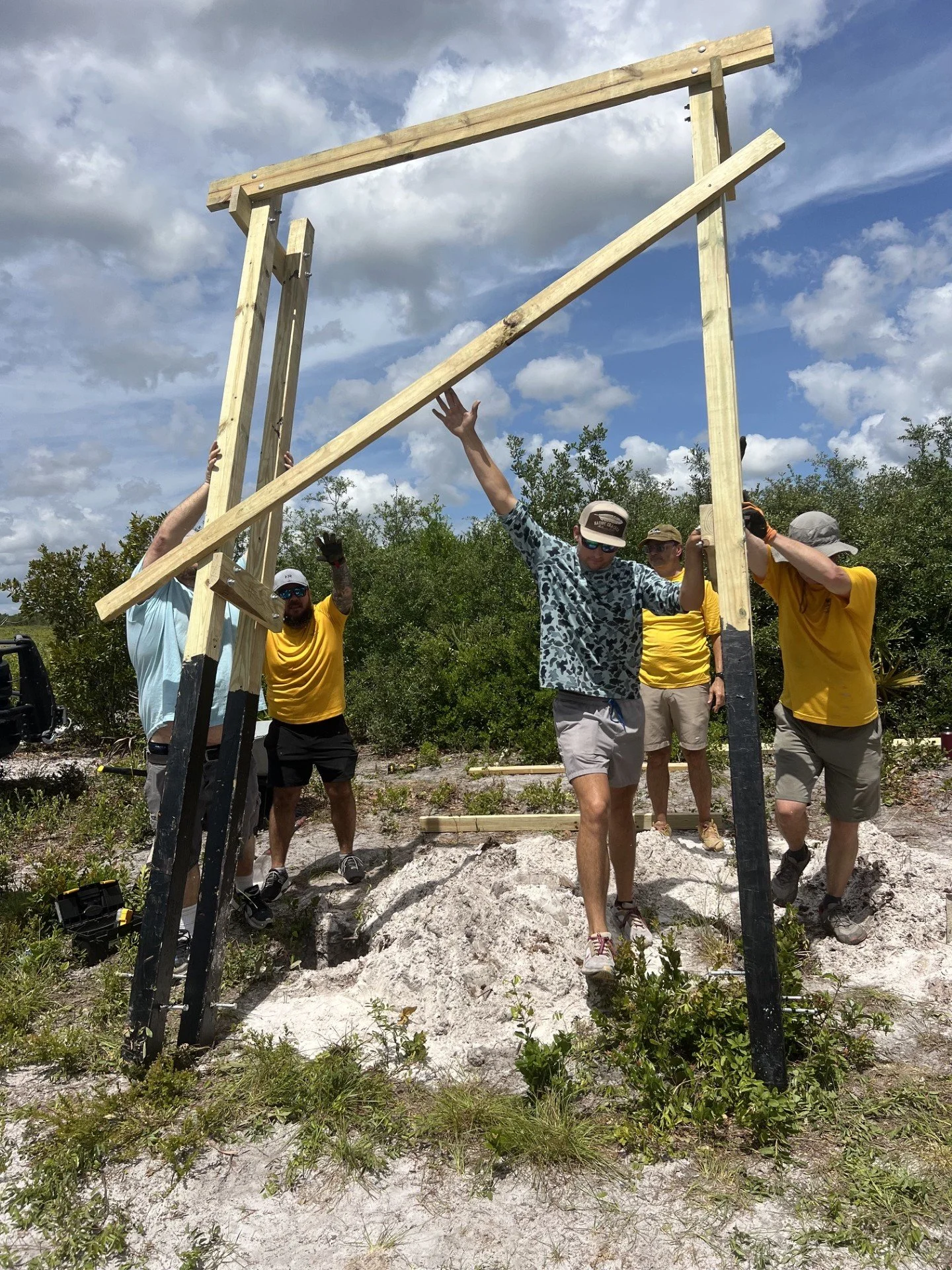
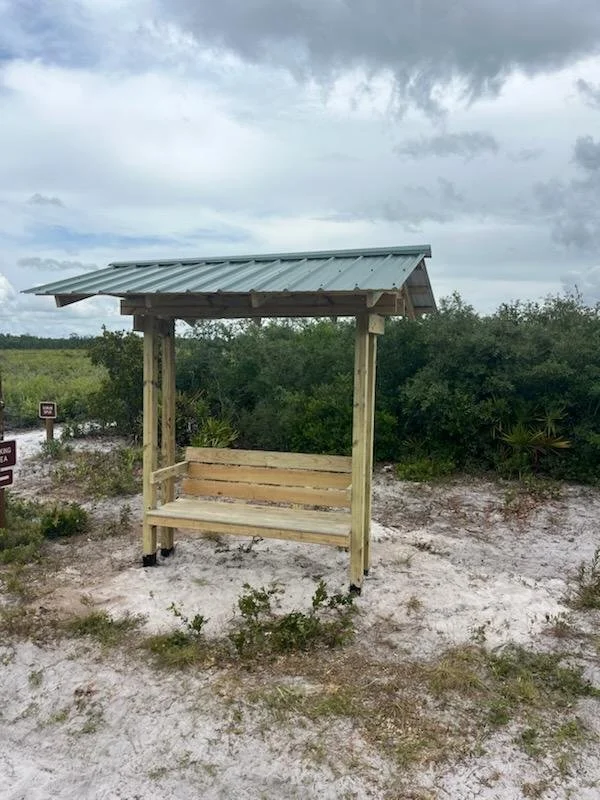
Three benches were constructed along Blue Spring State Park's Pine Island Trail as part of Connor York's Eagle Scout Service Project. After months of planning and preparation, the project was successfully completed on June 8th! Connor York is a rising senior at DeLand High School working towards his Eagle Scout rank — the highest achievement in Scouting — by leading more than 30 scouts, leaders, and volunteers to build and install these benches. Connor is a member of Scout Troop 550 at First Presbyterian Church in DeLand, and the project was made possible through funding from the Friends of Blue Spring State Park. The project also continues a family tradition of service, as Connor’s older brothers completed their own Eagle Scout projects at nearby state parks: Ian York at Hontoon Island State Park and Owen York at DeLeon Springs State Park.
Thanks to the efforts of many helping hands, these benches will provide a place for visitors to rest and enjoy the beauty of Blue Spring for years to come.
Manatee Moments: Summer Calves
Summer is definitely not “manatee season” at Blue Spring as most manatees will be venturing out in the river, lakes and the coast this time of year, but some will stop by, especially mothers with calves as our manatee observer volunteers can attest to! We had a record number of manatee sightings in May and June and it’s nice to see some of our “known” manatees from the winter making summer visits. It’s also the time of year when people swim, paddle, tube and dive in the spring run, so please remember to observe manatees from a distance and do not approach, chase or touch them. Manatee calves depend on their mom for the first 1-2 years or their lives and cannot survive on their own.
Check out some of the recent manatee sightings!
Photos: Save the Manatee Club
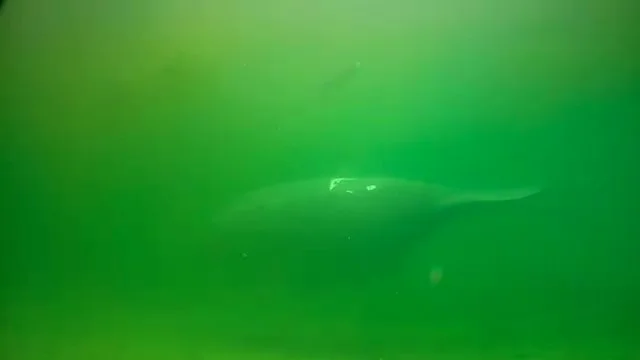
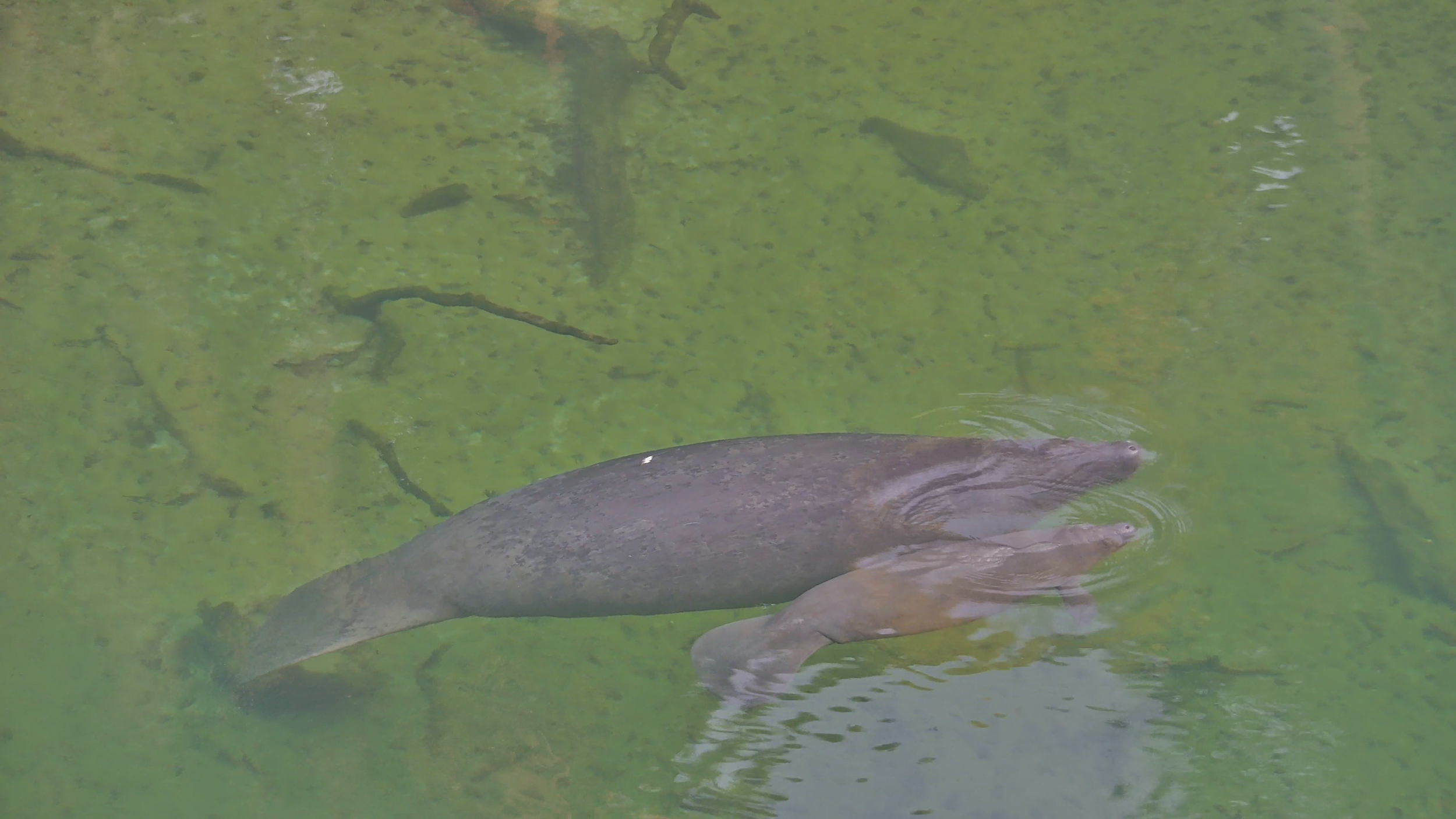
Manatee ‘Mata Hari’ was visibly pregnant when she went by the Save the Manatee underwater webcam on June 12th (above left photo). On June 25th, she came in with a little calf in tow. This is Mata Hari’s 7th known calf and she likes to give birth in or near the spring and bring the calves in for visits throughout summer. Oftentimes she will go up the Wekiva River and all the way up to the Wekiva head spring in the early fall, so Save the Manatee Club will be keeping an eye out. Here she is with her newborn on June 25th: https://youtu.be/qBBf4-t9C7w.
We also caught her on the webcam on June 30th: https://youtu.be/qu3EpOBa5Zo. But Mata Hari wasn’t the only one to bring in a new calf! ‘Amy’ brought in a calf one day prior on June 24th! https://youtu.be/kPBB9jv0s-A.
Manatee ‘Moore’ wasn’t far behind and brought in a new calf on June 29th (above right photo).
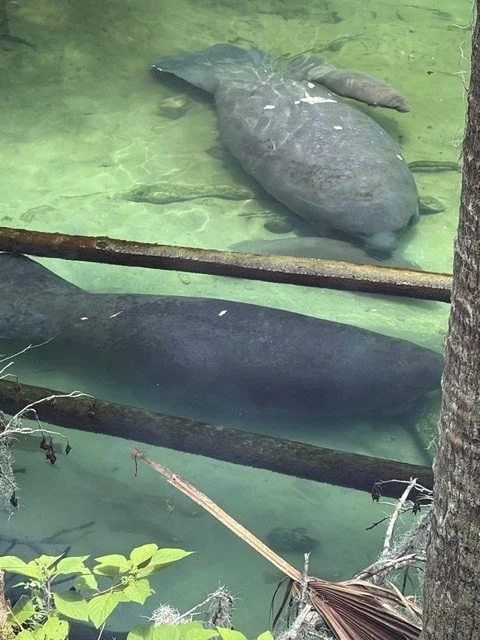
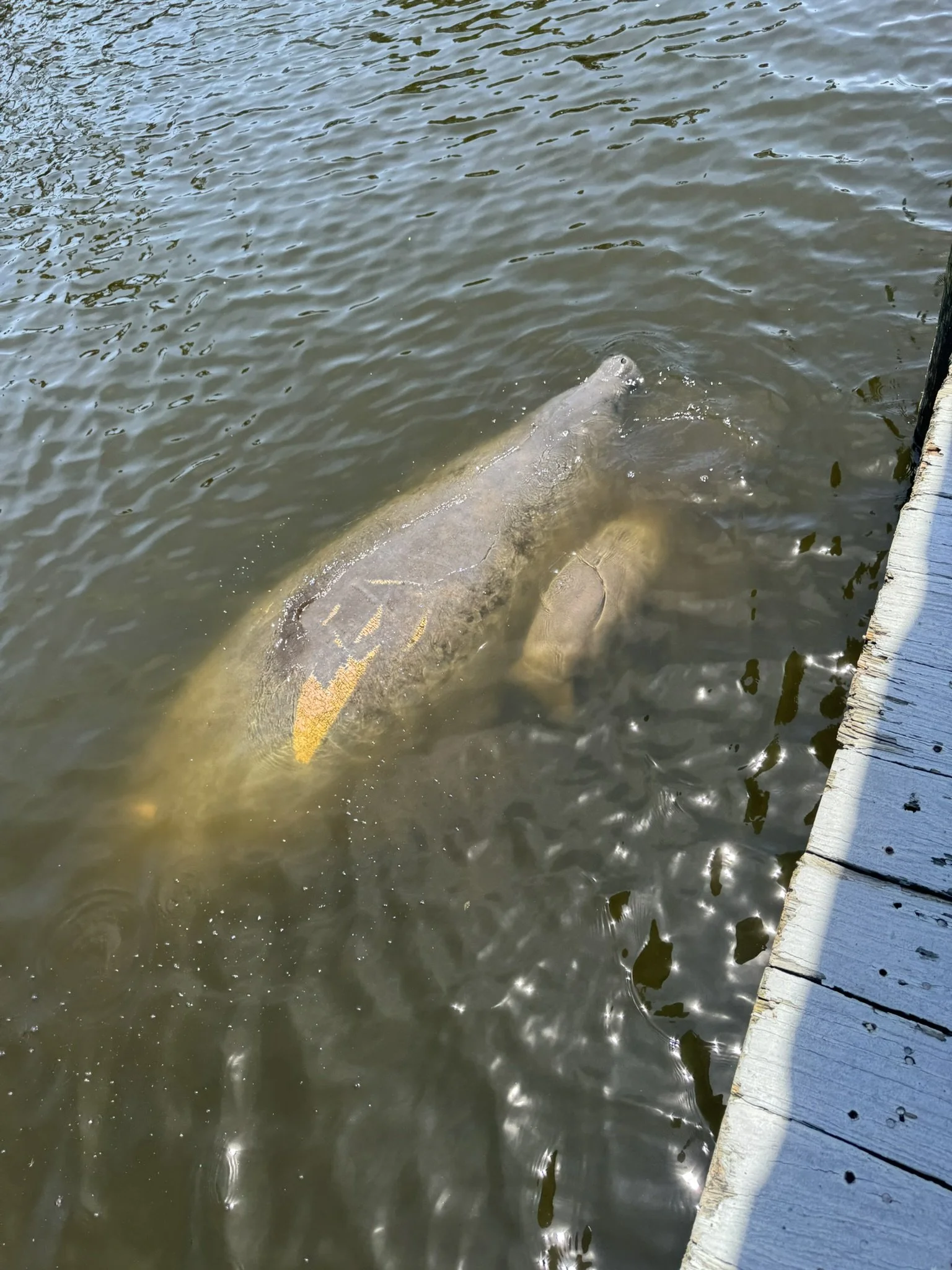
Photo 1: Volunteer Laura B. | Photo 2: Manatee Jaden photographed at Holly Bluff Resort Marina
Manatee observer volunteer Laura B. got this sweet photo of Mata Hari and Moore hanging out together with their calves (above left photo).
June 26th seemed to be a big meet-up. Both Moore and Mata Hari brought in their new calves and manatees ‘Nola’ and ‘Rojar’ brough in their yearling calves: https://youtu.be/u9WFZ-MmQ4w.
Later in the day, a mother manatee with two same-sized calves made a quick visit. Twins? We don’t know. Twins are very rare for manatees, but oftentimes nursing mothers will ‘adopt’ orphaned calves and raise them alongside their own.
On June 5th, Save the Manatee received a report from our friends at the Holly Bluff Resort Marina in Deland, just north of Blue Spring. They had photographed manatee ‘Jaden’ with a newborn calf at their marina (above right photo). Jaden is easy to recognize by a big white scar on her back and half her tail missing from a watercraft collision several years ago.
We were excited to see the pair briefly at Blue Spring on July 6th!
Critter Corner
Florida Scrub Jay - Aphelocoma coerulescens
The Scrub Jay is the only endemic Florida bird, meaning that unlike its cousin, the Blue Jay (found everywhere east of the Rocky Mountains and throughout Florida), the Scrub Jay is only found in Florida. You can see from the map above why the Scrub Jay is considered a threatened species! Scrub Jays are omnivorous, eating acorns, berries, insects, snakes, lizards, and even mice. That thick beak is useful for opening acorns and for digging holes to bury the excess. The Cornell Bird Lab estimates that a single Scrub Jay may store (cache) as many as 8,000 acorns every fall.
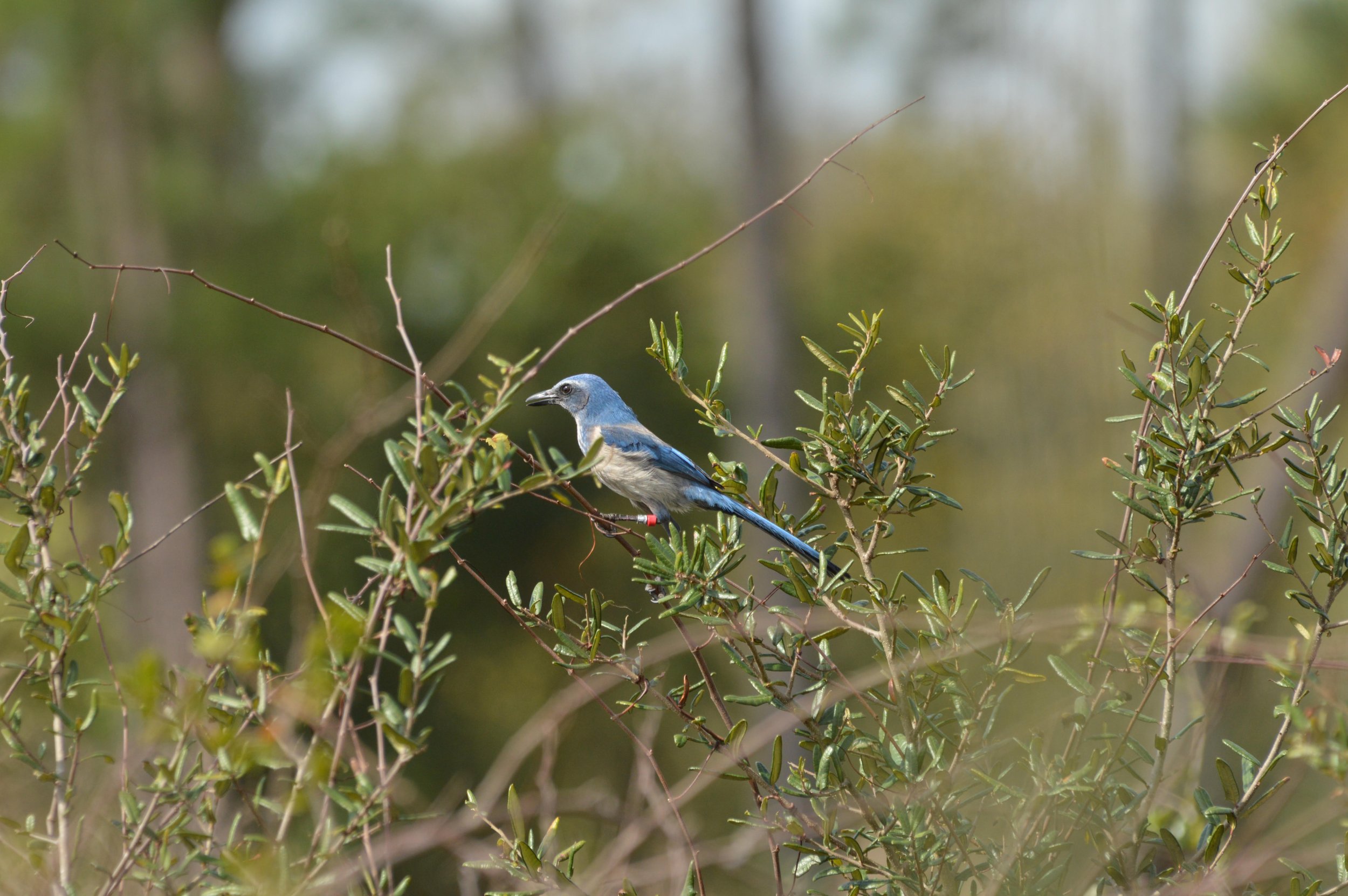
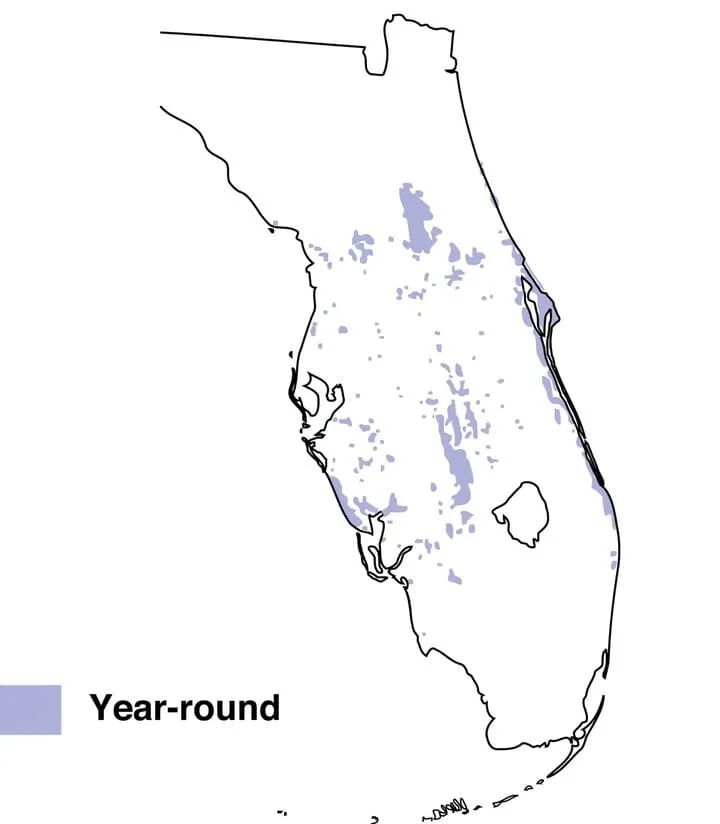
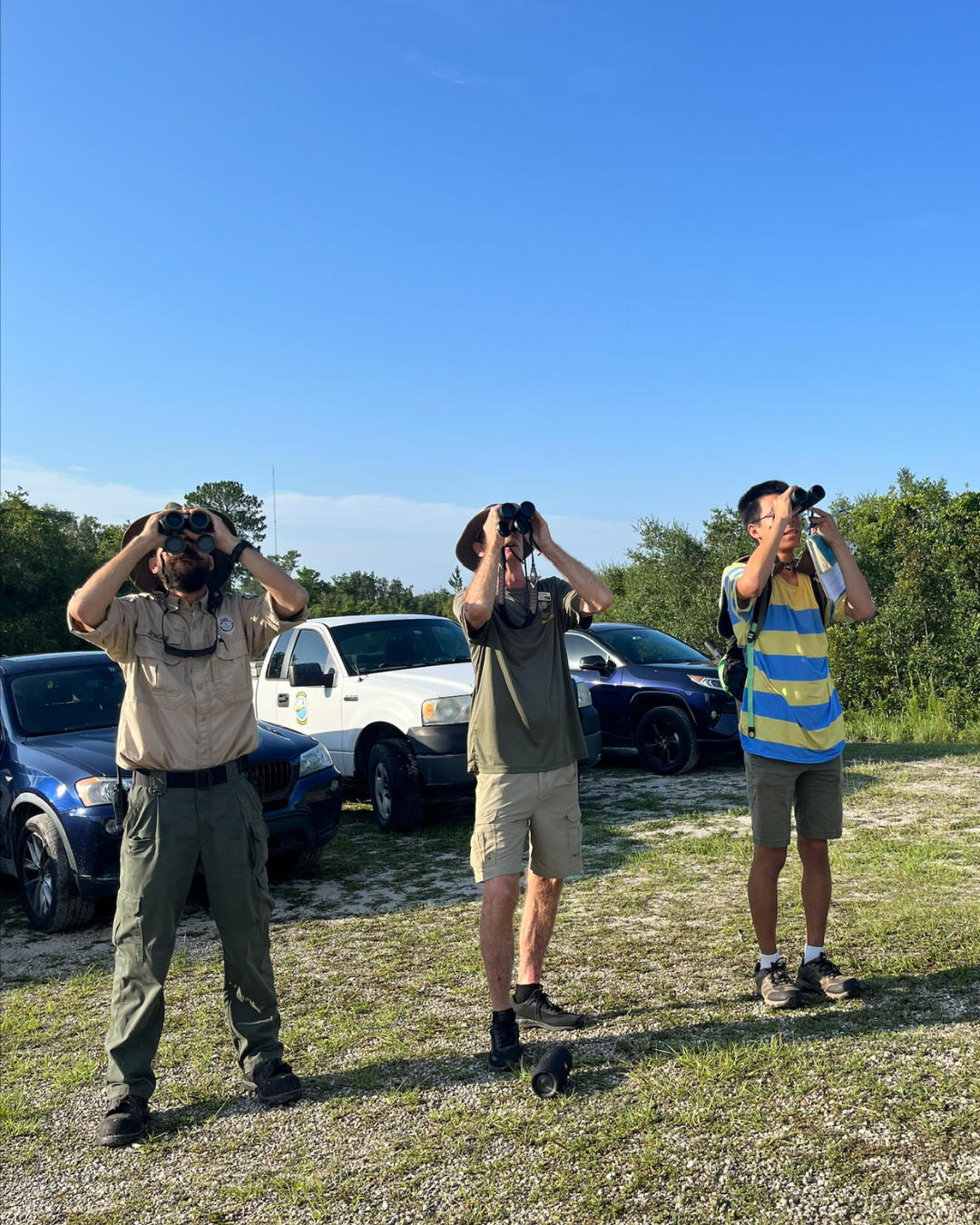
Photo 1: District Biologist Peter Jensen | Photo 2: Cornell Bird Lab | Photo 3: Erin Paulakovich
Scrub Jays get their name from their habitat, which is composed of scrub - low-growing (less than about 6’ tall) oak, shrubs (e.g. lyonia) and other plants native to the sandy ridges of Florida. If that scrub gets too tall due to wildfire suppression, the Scrub Jays will move away. According to the 2025 State of the Bird Report, Scrub Jays are considered a Red Alert Tipping Point species (meaning there has been a precipitous decline in their population (more than 50% in the past 50 years)), so it is important to do what we can to protect the birds and their habitat. The proscribed burns that you see in many parks (including Blue Spring) are to help maintain the scrub for Scrub Jays.
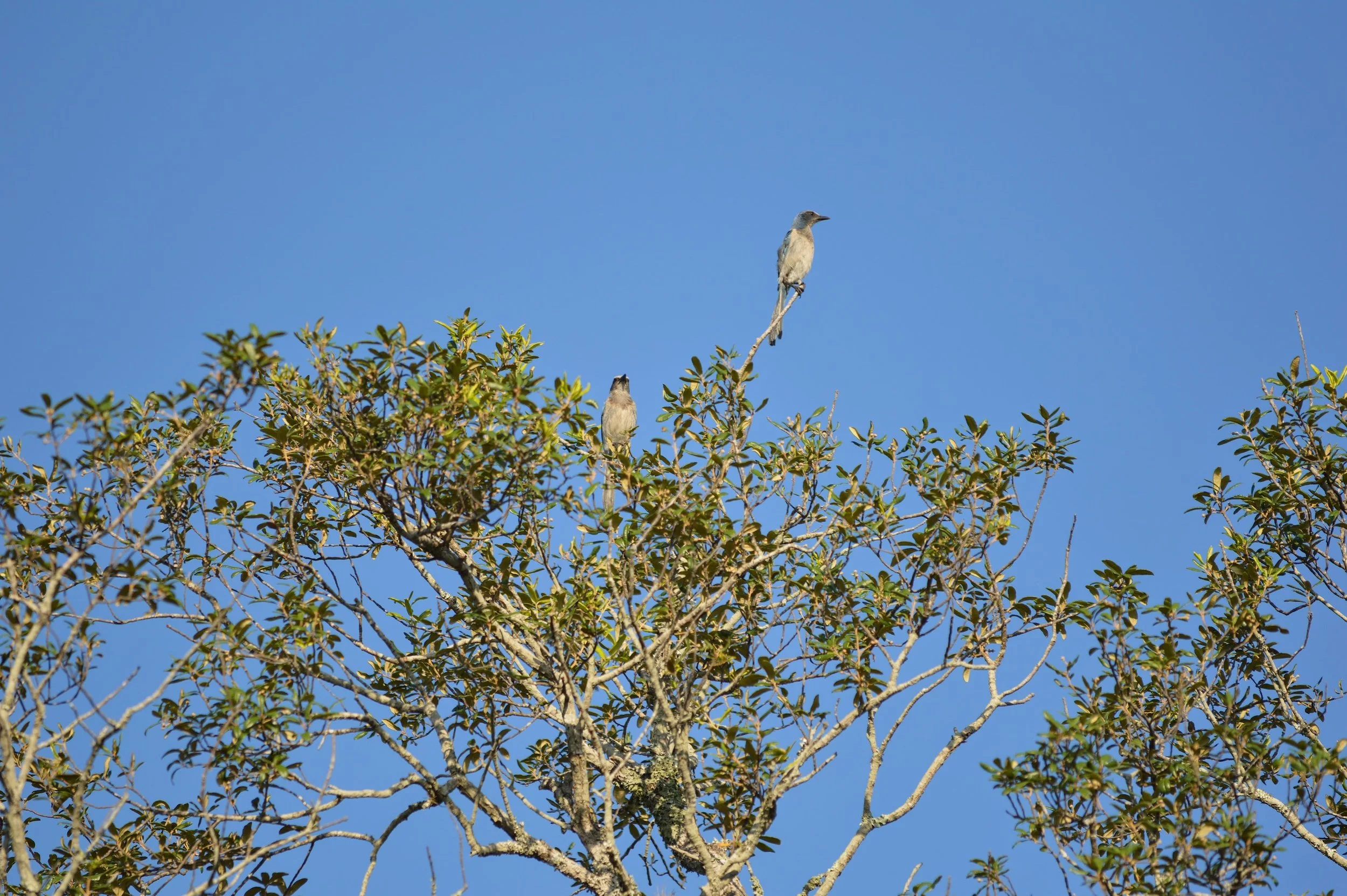
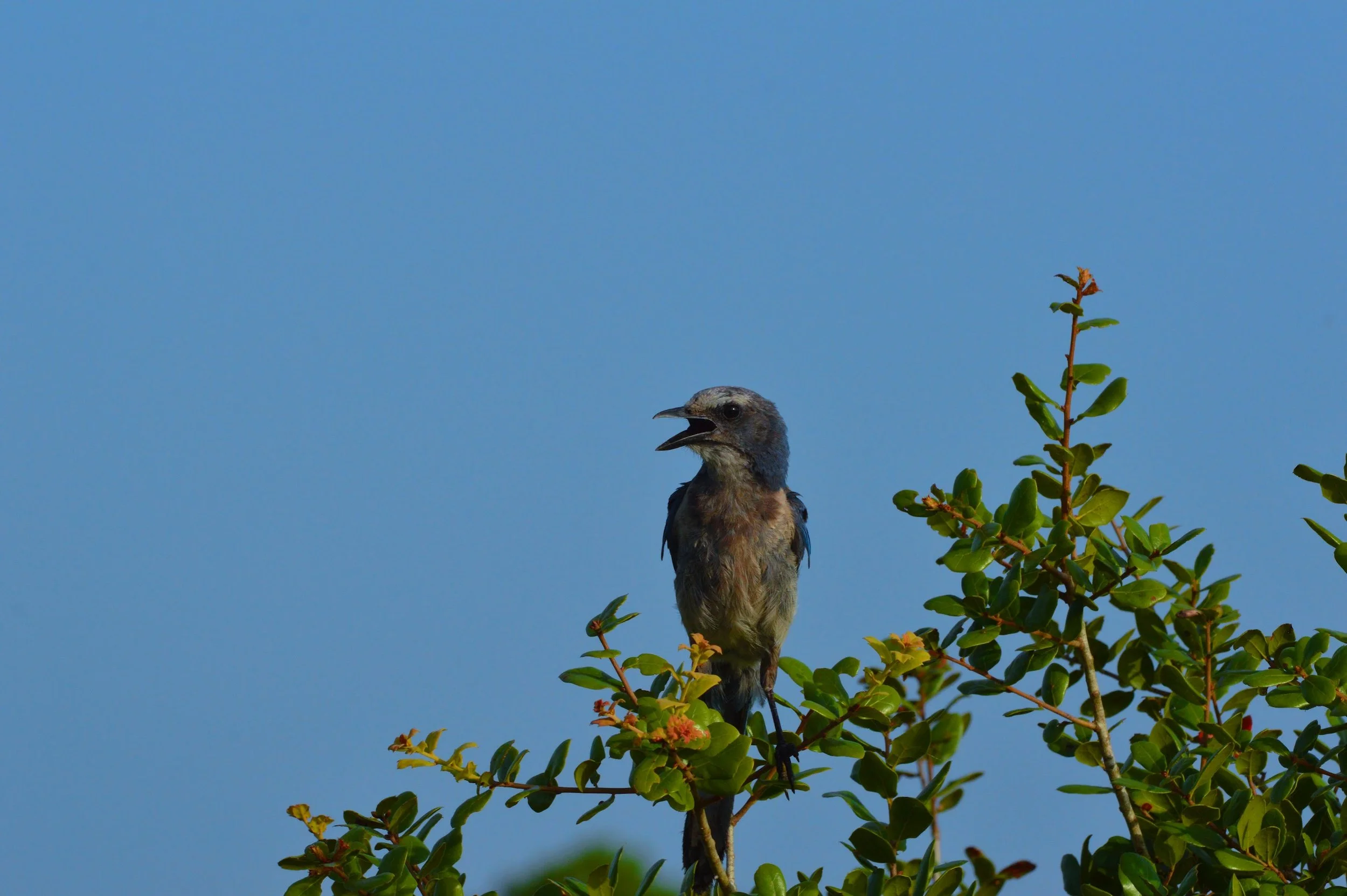
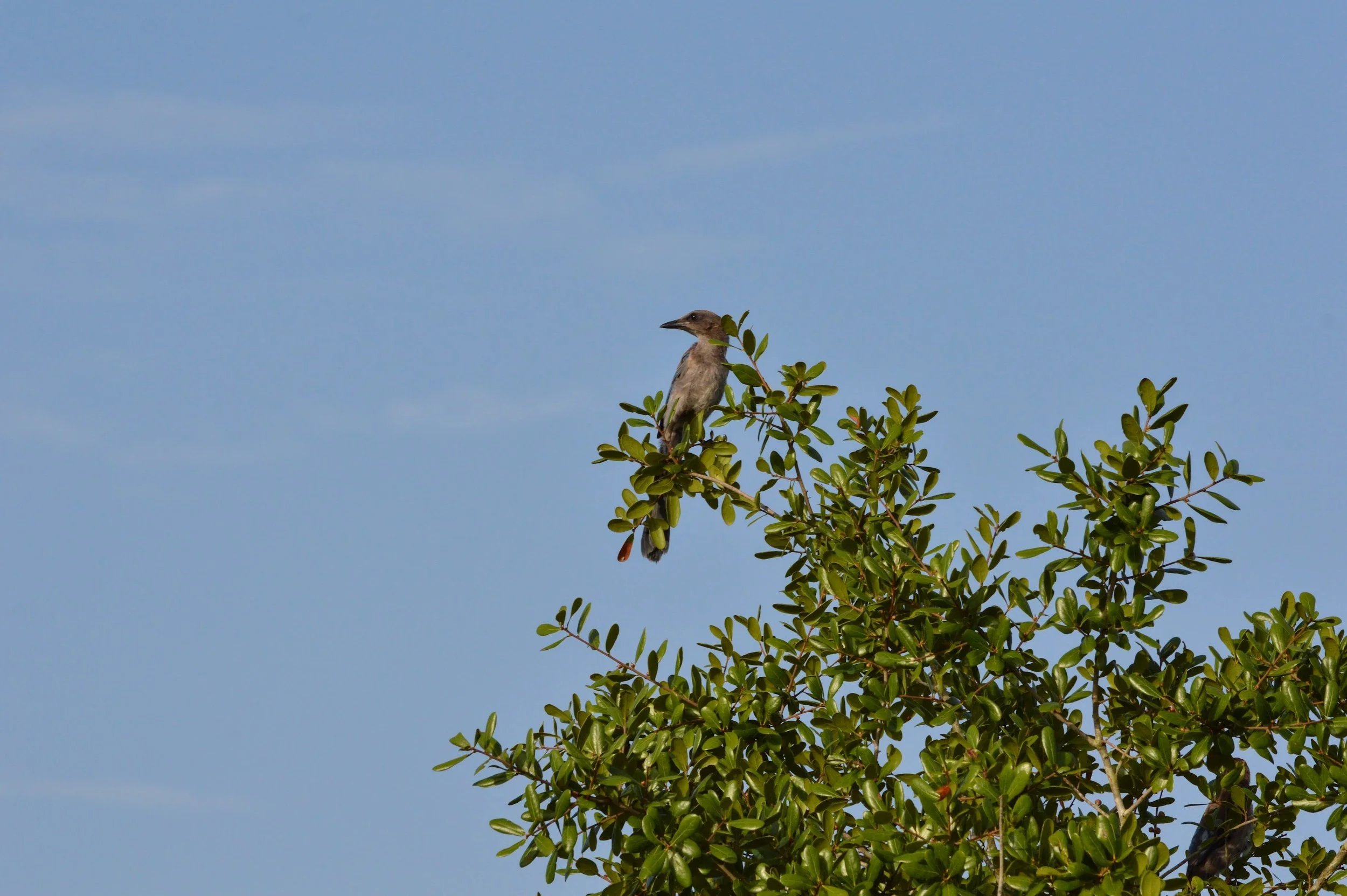
Photos: District Biologist Peter Jensen
One of the neatest things about Scrub Jays are their family dynamics. A family consists of the parents (permanent monogamous bonding) and up to 6 offspring. The family works together to feed chicks. Young birds stay with their parents for about two years before finding their own territory, and during that time, they help raise their younger siblings. The birds also work together to keep an eye out for predators. Usually one individual will be the sentinel and alert the rest of the family when there is a threat in their territory.
You can keep an eye out for JayWalks and other events at Blue Spring State Park here.
Junior Ranger Friends
Gary the Gopher Tortoise is happily trundling through the woods looking for something good to eat. Have you ever been lucky enough to see a gopher tortoise in the park? Gopher tortoises are rare enough in Florida that they get extra protection to keep them safe (like their own road signs). A good Junior Ranger always watches out for wildlife and gives them space.
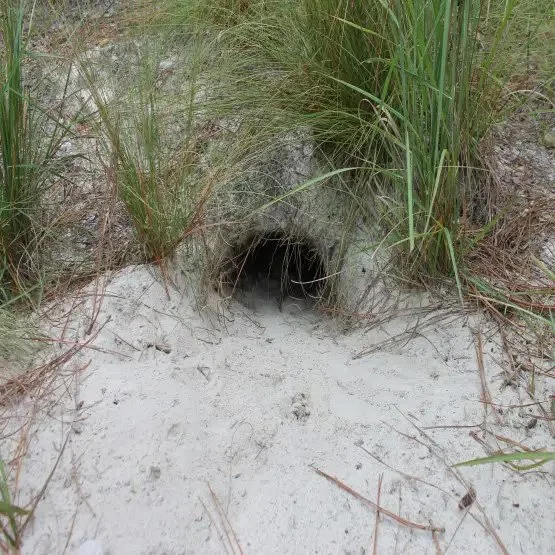
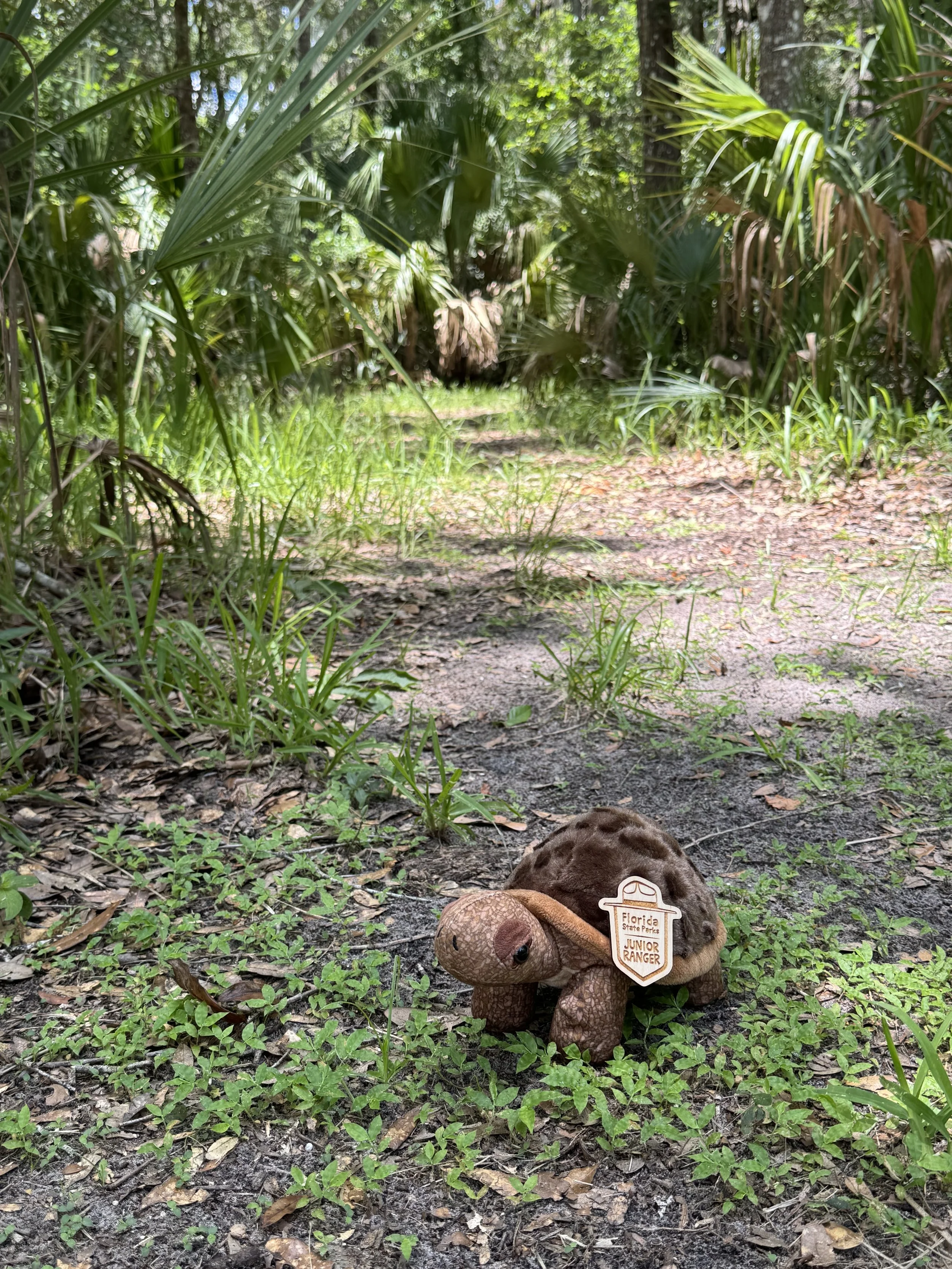
Photo 1: FWC | Photo 2: Missy Gibbs
Some of you may have seen a gopher tortoise burrow. The burrow is really important to tortoises, since it’s where they spend most of their time. Not only do Gary and his friends live in their burrow, so do lots of other animals like burrowing owls, indigo snakes, and Florida mice!
The burrows can be 15-40 feet long. Wow, tortoises must really like to dig! Gary wants to remind all of you Junior Rangers that if you find a burrow, please keep your distance and leave it alone so the tortoises and their eggs are safe. Tortoises often lay their eggs in the soft sand outside of the burrow. Junior Rangers know how important it is to protect nature as we find it and that no one should do any digging in a park (unless you are Gary the Gopher Tortoise!).
The Friends of Blue Spring State Park is a group of volunteers dedicated to helping ensure Blue Spring State Park and Hontoon Island State Park remain fun, interesting, educational, and beautiful places to visit!
For general questions or inquiries, please contact info@friendsofbluespringstatepark.org.
